As Jonathan became familiar with Eastern Orthodoxy, he was impressed at how they had endured persecution from Muslims and Communists in many countries. Their heroes are not pastors of large churches or music leaders. Their heroes are martyrs. Jonathan thinks that if persecution becomes worse everywhere, Eastern Orthodox believers are the ones who will endure.
► Read 1 Thessalonians 1 aloud together. Each student should write a paragraph that summarizes this scripture passage. What happened at the time when these people became Christians? Each student should write a list of statements. As a group, discuss what you have written.
Eastern Orthodoxy
Introduction to Eastern Orthodoxy
The word Orthodox comes from Greek words that mean “right worship.” The Eastern Orthodox Church believes that it is the true church with the doctrines and practices that provide the right worship of God.
Eastern Orthodoxy and Roman Catholicism officially separated in A.D. 1054. Each claims to be the original church founded by Jesus and the apostles. Each claims to be God’s church on the earth and the one with true doctrine, based on the tradition of the early Christians. They believe many of the same doctrines. Their worship would look much alike to someone not familiar with them.
Eastern Orthodoxy has 15 self-governing church organizations. They are divided geographically. In some nations the church uses the nation’s name to form a church name such as Russian Orthodox Church or Serbian Orthodox Church. Others of the 15 include the Greek Orthodox Church of Antioch, the Romanian Orthodox Church, and the Church of Cyprus.
Each church organization is ruled by a patriarch or archbishop. The Patriarch of Constantinople is considered the highest position of the 15 leaders. The ancient city of Constantinople is now Istanbul, Turkey. The Patriarch of Constantinople does not have authority over the other church organizations, but they all honor him as the highest.
Estimates of the number of Eastern Orthodox believers range from 225 million to 300 million. It is the second largest Christian organization in the world, after Roman Catholicism.
In many nations of Eastern Europe, the majority of the population considers itself Eastern Orthodox, and there are also large numbers of Eastern Orthodox believers in several countries of the Middle East.
► What Eastern Orthodox churches are you familiar with?
Beliefs of Eastern Orthodoxy
[1]The Eastern Orthodox Church believes basic Christian doctrines about God, such as the Trinity and the deity of Christ and the Holy Spirit.
Eastern Orthodoxy relies heavily on the tradition of the church. To prove a doctrine, their leaders are as likely to quote from early church leaders as to quote from the Bible. They teach that the Bible is the authority for their doctrine, but that the Bible must be interpreted by the church.
Orthodoxy has developed a complex system of beliefs and practices that are based on tradition. The church claims that it has the authority to teach what is necessary to salvation, even if it is beyond what is taught in scripture. Eastern Orthodox followers believe that their traditions do not contradict the Bible.
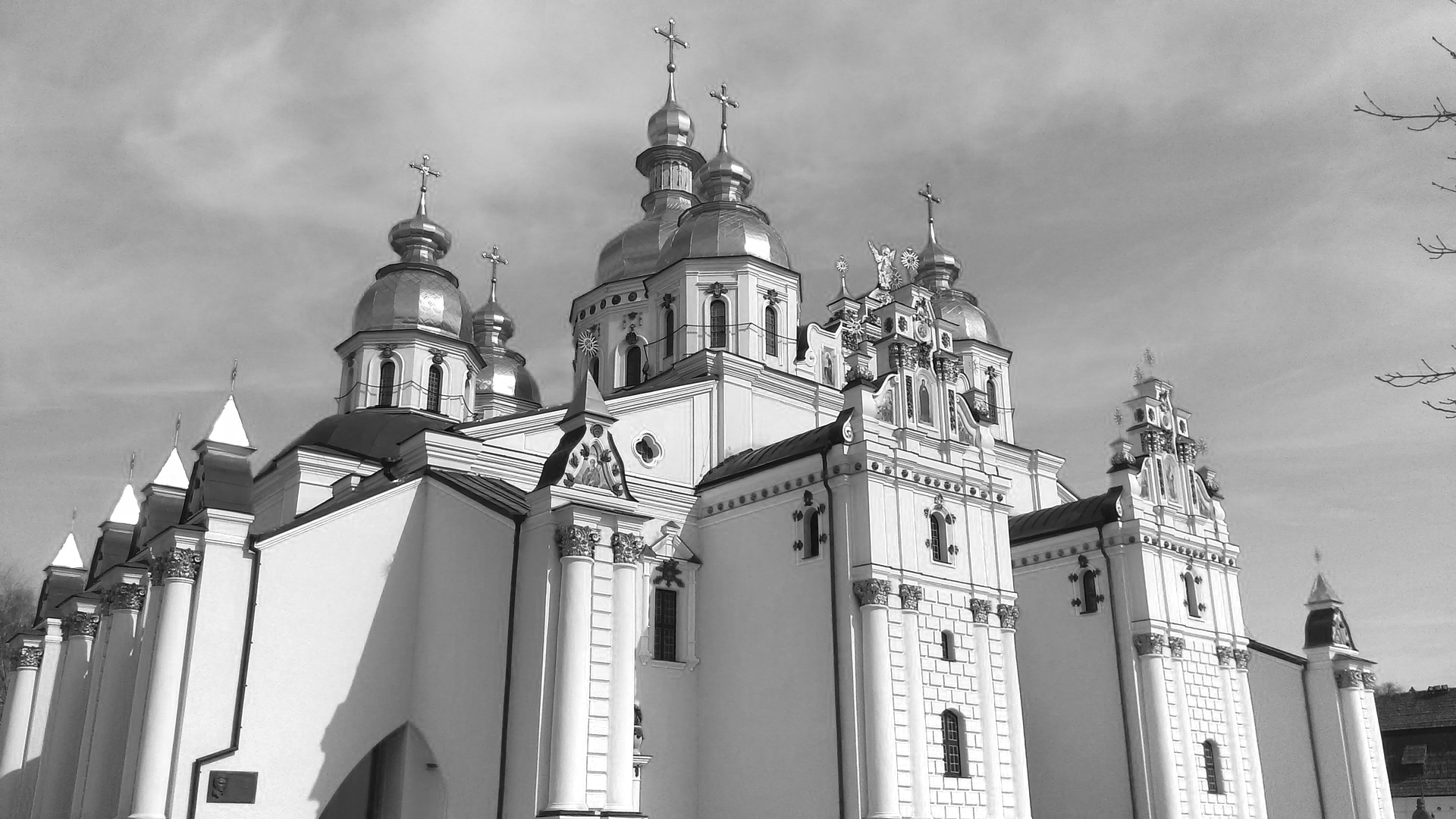
The worship style of Orthodox churches is very formal. They have many large cathedrals around the world that are known for their great architecture. Cathedrals are decorated with pictures and statues of saints from history. Priests often have special robes. The worship activities are done mostly by the priests, with little participation from the congregation.[2]
The people of many cultures became Orthodox while keeping the religious practices of their previous religion. Formerly pagan idols were given the names of Christian saints. The ceremonies of the church were mixed with the ceremonies of an idolatrous religion or a nature religion, or even witchcraft.
Many Orthodox followers consider God, and even Jesus, distant and unconcerned about them, so they pray to saints instead.
The Holy Spirit helps us to pray in a way that will be accepted by God, see Romans 8:26-27. We should have confidence that God hears and responds to our prayers. A person who prays must believe that God responds to prayer, or that person does not have the faith that pleases God, see Hebrews 11:6.
Pictures and statues of saints are provided in the churches so people can pray to them. Objects that were used by saints are kept in the churches for honor. Sometimes bodily remains such as teeth or bones are kept in the church. People come to kneel and pray to the saints represented by the bones.
► What is idolatry? Are some of the practices of Eastern Orthodoxy idolatry?
Mary is especially honored in Eastern Orthodoxy. Many followers of Orthodoxy pray to Mary more than to God. They feel that Jesus will listen to Mary and be influenced by her. Mary has become a mediator between the worshipper and Christ. Unlike Catholicism, Eastern Orthodoxy does not believe that Mary was born with a human nature that was different from all others and always free from sin.
Prayer to Jesus is a mark of Christians everywhere, see 1 Corinthians 1:2. Christians also pray to God the Father, see 1 Peter 1:17. The Bible also talks about communication with the Holy Spirit, see 2 Corinthians 13:14. The Bible never tells us we should pray to Mary or any other person except God.
Both Catholicism and Eastern Orthodoxy teach transubstantiation, the belief that during communion, the bread and wine are transformed into the literal body and blood of Jesus, so that the worshipper can receive them for salvation.
When Jesus showed the disciples how to do communion, he was still alive and present with them, see 1 Corinthians 11:23-25. Therefore, when he said, “This is my body,” he meant that the bread was a symbol of his body. Today, communion should be considered the same as when Jesus instituted it.
Unlike the Roman Catholics, those in the Eastern Orthodox Church do not believe in purgatory. They also do not believe in a pope who has the authority of Christ over the worldwide church. They reject the Roman Catholic pope and do not have a leader of their own to whom they give similar authority.
Orthodox priests are allowed to marry, but only an unmarried priest can become a bishop.
Eastern Orthodoxy teaches the doctrine of theosis as the process of salvation. In theosis a believer is gradually transformed to become like God, having his same nature of holy perfection. This is accomplished by grace and the work of the Holy Spirit. The process is not complete until after death. Those in the Eastern Orthodox Church say that in receiving this holy perfection, we become gods, but they do not mean that we are infinite like God.
The Bible says that every believer shares the nature of God, see 2 Peter 1:3-4. We do not have to wait until after death to have his nature.
They believe that Christ has defeated sin for us, but each Christian must receive the power of the Holy Spirit to progress in his personal victory over sin and impurity.
[3]The Eastern Orthodox Church teaches that a Christian is justified in Christ, which means that the believer is forgiven of the sins he has already committed and made actually righteous in his living. It does not mean that a person is counted innocent while he continues to sin, and it does not mean that if a person goes back to the former life he is still justified. The believer depends on the power of the Holy Spirit to live righteously every day. This is also good theology if a person remembers that God accepts him because of Jesus and not because his works are good.
Many followers of Eastern Orthodoxy believe the gospel and experience the grace of God. However, the church does not clearly preach a gospel message that a sinner must repent of his sins and put his faith in Christ to receive immediate assurance of salvation. Therefore, of the millions of Orthodox members, most continue to live in open sin while they practice the religious customs. Most of them do not understand how to be saved.
► What are some good things about Eastern Orthodox theology?
► Now go back and read the bold and italicized text and each scripture.
[1]“Now as the church of Jesus Christ is formed on the foundation of the apostles and prophets, Jesus Christ being the chief corner stone, the doctrines of this Christian church must be sought for in the sacred scriptures.”
- Adam Clarke Christian Theology
[3]“The atonement encompasses all sins whatever, original as well as actual, past and future, great or small, in time or eternity.”
- Thomas Oden The Word of Life
Evangelism/Using the Handbook of Doctrine
The Eastern Orthodox Church teaches the foundational Christian truths of the Trinity and the deity of Christ and the Holy Spirit.
There are some Orthodox worshippers who have put their faith in Christ for salvation, but the message of the gospel is not clear in the church teaching. Most have not experienced repentance, forgiveness, and assurance of salvation, and are not living in relationship with God. Therefore, it is important for a Christian to share the gospel. The essentials of the gospel that are neglected in Orthodoxy can be proved with the following sections from the Handbook of Doctrine:
(9) Salvation is only by the atonement of Christ.
(10) Only God should be worshipped.
(11) We receive salvation by faith.
(12) We can have personal assurance of salvation.
Because Eastern Orthodoxy has added traditions that they consider essential to Christianity, a Christian should show them the scriptures cited in the Handbook of Doctrine in the section
(1) The Bible is sufficient for doctrine.
A Testimony
John was raised in an Orthodox family in Rumania. His grandparents were leaders in the church. He was baptized and married in the church but did not attend services often. The priest never talked to him about his sins. John did not have a Bible, and the priest never told him he should read a Bible. As a young man he joined the communist party. He was sent by the communists to watch Baptist worship services. He was supposed to ask them why they were Baptists instead of orthodox. In the services, he realized he had never repented of his sins. He made the decision to repent and become a real follower of Jesus. He was pressured by his family and by the communist party to give up his new faith. He was encouraged by spending time reading the Bible. After his family saw the change in his life, many of them became believers also. John says that the biggest difference between Eastern Orthodoxy and evangelical Christianity is that evangelicals emphasize the new birth.
Scripture Study – Part 2
► Now read 1 Thessalonians 1 again. Each student should write a paragraph explaining the message this passage has for a follower of Eastern Orthodoxy. Several students can share what they wrote.
Optional Reading: Oriental Orthodox Church
The Oriental Orthodox Churches are distinct from the Eastern Orthodox Church.
Oriental Orthodoxy has six church organizations: Coptic, Ethiopian, Eritrean, Malankara Syrian, Syriac, and Armenian Apostolic. Each organization is led by a patriarch. Each organization is governed independent of the others. The patriarch of the Coptic Church is the pope of all Oriental Orthodoxy, but does not have authority over the others, except to lead meetings of representatives from the six organizations.
In the countries of Armenia, Ethiopia, and Eritrea, Oriental Orthodox Christians are the largest religious group. In certain Muslim countries where Christians are a small percentage of the population, such as Egypt, Sudan, Syria, and Lebanon, Oriental Orthodox Christians are a high percentage of the Christians. They have been severely persecuted for centuries in Muslim countries.
Oriental Orthodoxy became distinct from other Christian churches because of a doctrinal disagreement in A.D. 451.
They separated because of theological disagreement over the nature of Christ. At that time there was one main church organization that represented Christianity. The church had not yet divided into the Eastern Orthodox Church and the Roman Catholic Church. Few churches had left the main church by this time.
The Council of Chalcedon, intended to represent all Christianity, made the decision that it is right to believe that Christ had two natures, the human and the divine. Some churches rejected this decision because it seemed to say that Christ was two persons in one. They believed that his nature came from both human and divine natures, but was just one nature. They believed they were holding the original beliefs of Christianity. Other issues were involved, including political issues, but the theological issue was the most important.
Within a few years after the council, bishops who disagreed with the council’s decision were expelled from the church. The Oriental Orthodox Churches were formed after that time.
Assignment for Every Lesson
Remember to find an opportunity to present the gospel to someone from this religious group. Prepare to share with your classmates about the conversation you have had. Write your 2-page written report and turn it in to your class leader.
SGC exists to equip rising Christian leaders around the world by providing free, high-quality theological resources. We gladly grant permission for you to print and distribute our courses under these simple guidelines:
No Changes – Course content must not be altered in any way.
No Profit Sales – Printed copies may not be sold for profit.
Free Use for Ministry – Churches, schools, and other training ministries may freely print and distribute copies—even if they charge tuition.
No Unauthorized Translations – Please contact us before translating any course into another language.
All materials remain the copyrighted property of Shepherds Global Classroom. We simply ask that you honor the integrity of the content and mission.